
The Other 30%
THE PERCEPTION GAP | OBSERVATIONS
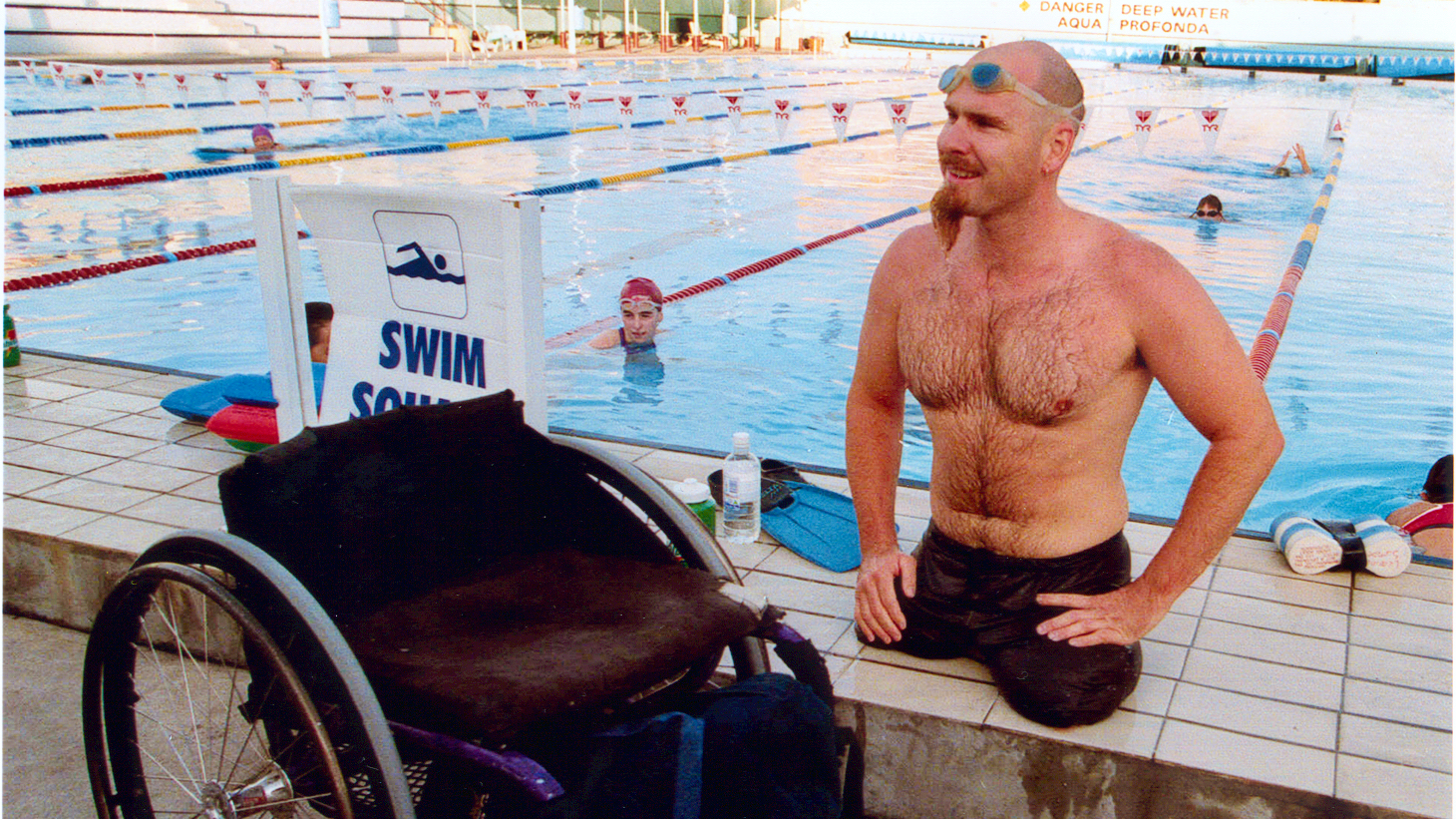
Somewhere around ten weeks after losing my legs, I had a realization.
Using a wheelchair was hard, physically. Getting in and out of it, lifting it; everything about it really.
It dawned on me that if I was going to get on top of this, if I was going to get through it as best I could, I was going to have to be strong, and the most obvious place to start, was to swim.
I'd been a swimmer all my life. Not just laps in a pool. I grew up swimming in the ocean.
So I knew how to swim.
Then it came time to take a bath.
I transferred from my wheelchair onto a bath board that straddled the tub and lowered myself into the water. As I sat down, I displaced enough water to send a tiny wave toward the other end of the tub.
It hit the end, turned around, came back — and knocked me straight over.
I remember lying there on my back, coughing and spluttering, thinking:
You've got to be kidding me.
I'd spent my life swimming in the ocean. Five-foot waves. Huge swells. Now half an inch of water had knocked me over.
“Mate, have you got some work to do...”
Not long after that, I got into a swimming pool for the first time.
That's when I discovered that my legs had done more in the water than I'd realized. Their weight had acted a little like ballast in the keel of a boat. Without them, my balance was completely different. It felt like I was sitting on one of those exercise balls. My freestyle stroke didn't work the way it used to, with my lower body slowly swishing from side to side like a shark...
There was no way I could have known this.
I had to get in the water to find out.
So I worked on my balance. I adapted. I kept swimming.
Eventually I was back in the pool every second day. Before long I was swimming twenty laps; a kilometre.
I’d just gotten out of the water one Tuesday morning when a thought occurred:
I could swim the Pier to Pub.
The Pier to Pub is a 1.2 kilometre (3/4 mile) ocean race held every summer in the coastal town of Lorne, two hours west of Melbourne along the Great Ocean Road. I'd swum it once before, about ten years earlier.
Until that morning, I hadn't been working towards the Pier to Pub.
I'd been working toward being a swimmer again.
But along the way, a possibility I couldn't see from the bathtub had become visible.
Three months later; nine months after the accident ; I lined up with 732 other swimmers and swam.
I finished number 473, leaving 259 guys behind me.
For years, I’ve told that story as an example of the power of perception, of how seeing myself as a swimmer first affected my result.
Now, I don't think I was wrong.
But I'm beginning to see something else in it.
When that half-inch wave knocked me over, I couldn't see the Pier to Pub from there.
Nor did I need to.
I just needed to get back in the water.
And every time I did, I learned something I couldn't have learned from the side of the pool.
Which has me thinking again about the 70% Rule, and how there are actually two parts to it.
There’s the part that is a gauge if you like, of when you know enough to act; when you've reduced the uncertainty enough that you're prepared to navigate what's left.
Then there’s the second part that says that you’ll only see the remaining 30% once you start moving. Like looking out to the horizon, you can only see as far as you can see.
As you move towards it, more comes into view.
We tend to think clarity comes first, then action.
Sometimes it does.
But more often than not, it’s through taking action that things come into view, into focus.
Which raises an important question for you, for all of us.
Are you waiting for clarity, or moving towards it?
Explore The Perception Gap
Discover how Warren's keynote helps audiences navigate uncertainty, see new possibilities and take action.