
Who gets to do this?
THE PERCEPTION GAP | OBSERVATIONS
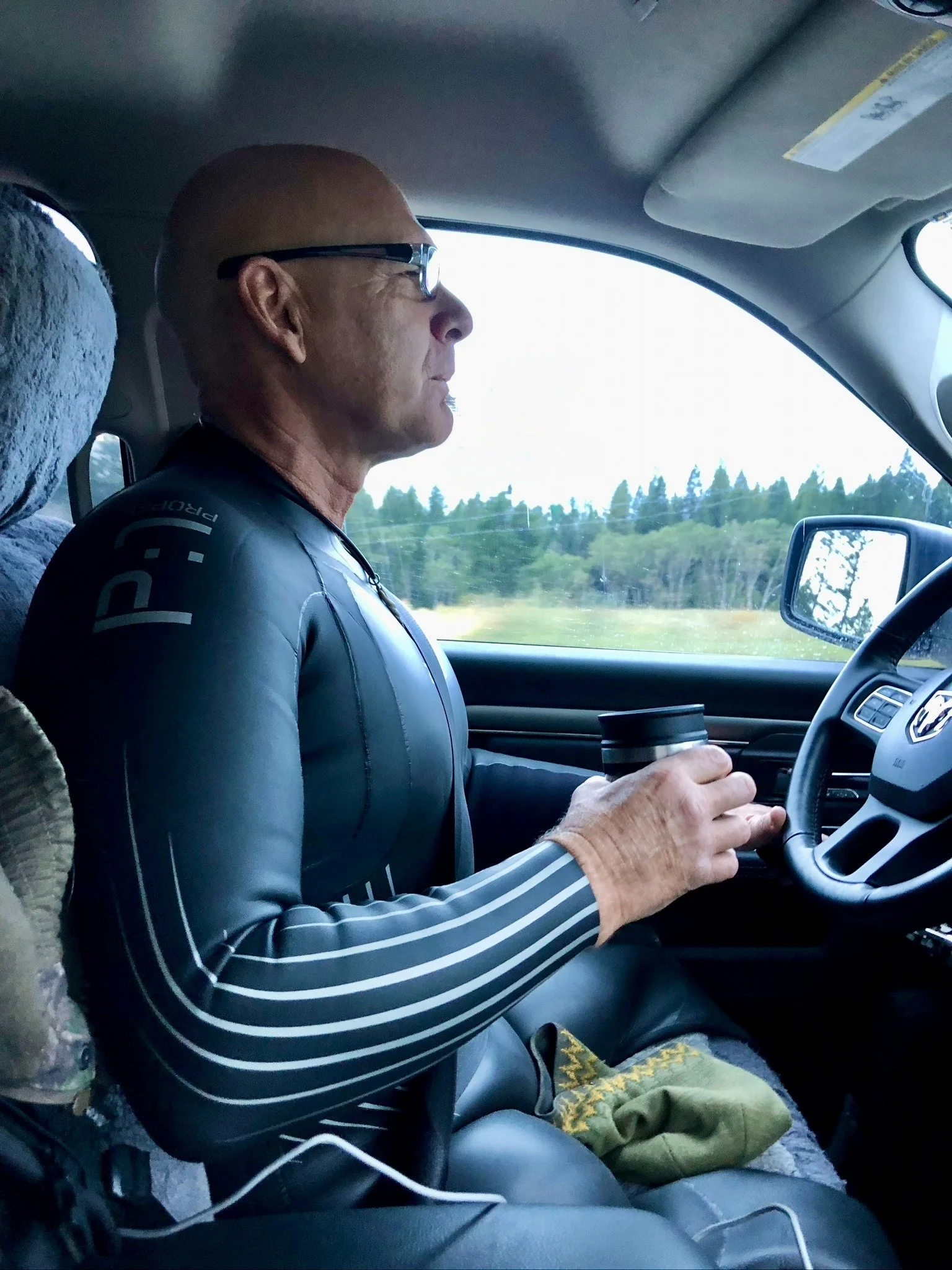
While I was still in hospital, learning how to navigate this new life, my occupational therapist, Elaine, asked me one day if I had a car.
"I do," I replied.
"Is it an automatic?"
"It is."
"Great," she said. "We’ll get it fitted with a hand control so you can drive."
My first reaction was:
Hang on a minute. A guy with no legs can drive?
Embarrassing now, perhaps, but my exposure to anyone with a disability was effectively zero. I had no idea this was possible.
So I took some lessons, we fitted a hand control to my car, and before long I was driving, on my own, to the grocery store.
The feeling was incredible.
For the first time since the accident, I was outside the hospital, on my own, in a vehicle.
The sense of freedom was enormous.
At one point, I found myself looking around at the cars I was sharing the road with. Or, more specifically, at the people driving them.
And a thought occurred to me.
If any of these people had any clue that I’m driving this car with no legs, they’d be freaked out...
I was freaked out.
And I was the one doing it.
I looked down at the space between what was left of my legs and the pedals and thought:
Who gets to do this?
How weird is this?
Looking back, I can see how easily that moment could have gone somewhere else.
I could have looked at everyone around me and thought:
They get to drive normally.
I have to drive like this for the rest of my life.
It would have been so easy to fall into victim mode.
I mean, that’s the tape that usually runs for me, right?
But something else happened.
Who gets to do this?
That question seemed to open a door.
And in that instant, I made a decision.
I was going to look at life through the eyes of an explorer.
I was going to get a kick out of this.
I was going to be curious about it.
Because, seriously...
Who gets to do this?
It felt like someone had reached into my head and flipped a switch.
It could have been so easy to get stuck at why.
Instead, a different question appeared.
What else could this be?
What could life look like now?
I’ve told this story for years.
But reading it back through the lens of the Perception Gap, I noticed something I hadn’t really considered before.
There are actually two Gaps in this story.
The first was opened for me.
When Elaine said, "We’ll get you a hand control so you can drive," she introduced a possibility that simply didn’t exist within the way I was seeing my circumstances.
A guy with no legs can drive?
The second Gap I opened myself.
Who gets to do this?
Nothing about my circumstances changed in that moment.
I still had no legs.
I still needed hand controls.
I was still going to drive differently from almost everyone around me.
The perception didn’t change the facts. It changed what those facts were allowed to mean.
But there’s something else I’m noticing.
I’ve been thinking about the Perception Gap as a space we need to learn to stay in—to resist the pull of certainty long enough for other possibilities to reveal themselves.
And I still think that’s true.
But this story reminds me that the Gap doesn’t necessarily have to stay open for hours, days or even minutes.
Sometimes it might.
Sometimes the question we're facing may require us to sit with not knowing for quite a while.
But sometimes?
Sometimes the Perception Gap is a space we deliberately hold open.
Sometimes it’s a door we open for only a moment: and that’s enough.
Long enough for another possibility to get through.
Maybe that’s what it means to look at something through the eyes of an explorer.
Not knowing what we’re going to find.
Just being willing to consider that there may be more to see.
Explore The Perception Gap
Discover how Warren's keynote helps audiences navigate uncertainty, see new possibilities and take action.